
Conservation Has Entered an Institutional Era
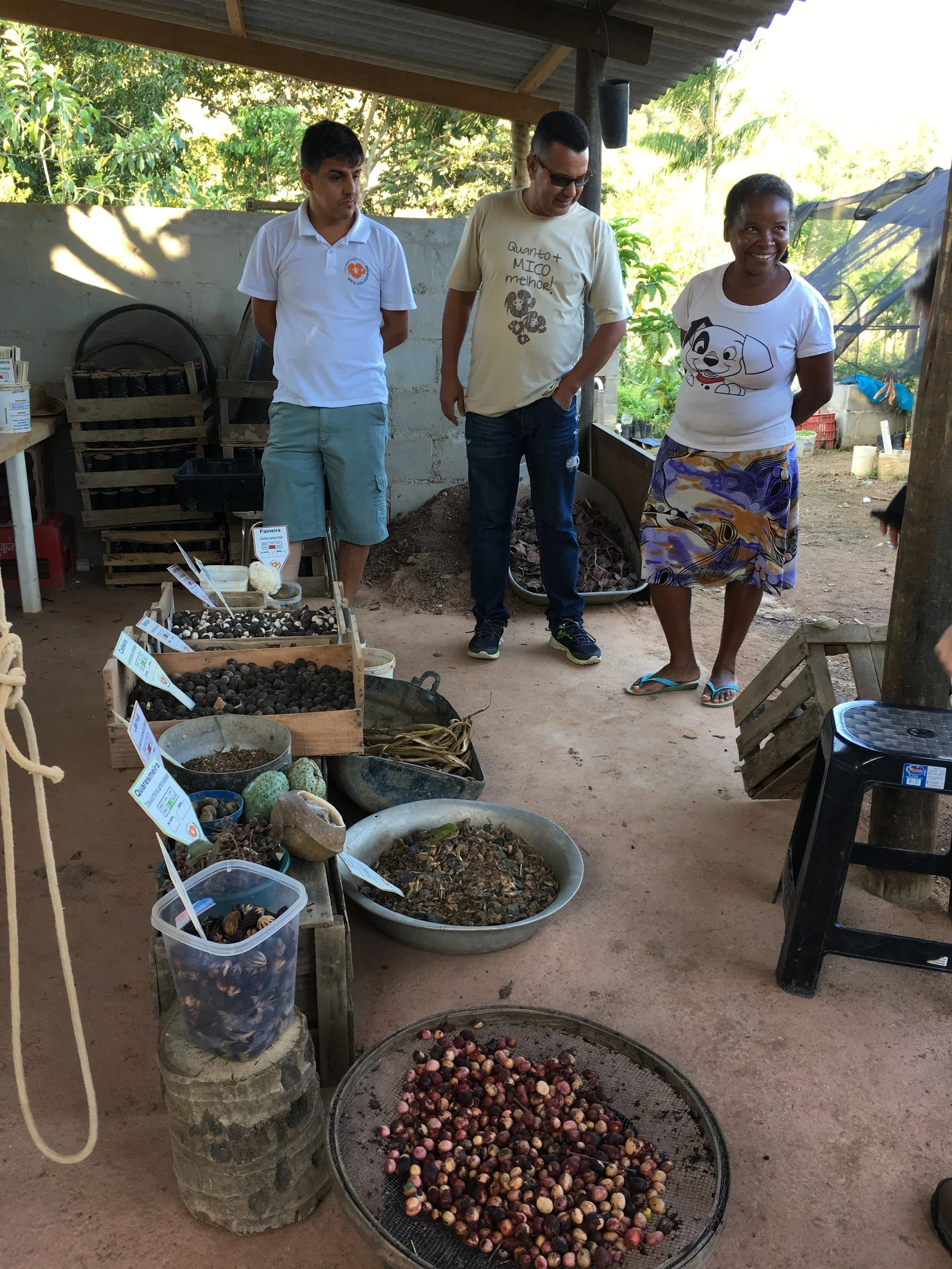
Modern conservation has been remarkably successful in identifying where biodiversity is most threatened and what must be done to protect it. Advances in ecology, remote sensing, genetics, climate science and landscape planning have transformed our understanding of the natural world.
At the same time, philanthropy has become increasingly sophisticated in directing capital toward conservation priorities, supporting protected areas, species recovery, restoration and scientific research on a global scale.
These developments have produced measurable progress. They have also shaped the assumptions upon which much of contemporary conservation funding now rests.
Most conservation investments continue to be organized around projects. A project defines an objective, establishes a budget, identifies activities, measures outputs and reports results over a specified period of time. This approach reflects sound management practice. It introduces accountability, allows donors to compare investments and provides confidence in financial resources being used responsibly.
Projects remain indispensable.
The difficulty, however, arises when projects become the primary unit of investment while the institutions responsible for carrying them out receive comparatively little attention.
Every conservation initiative depends upon organizations capable of hiring and retaining staff, maintaining financial records, navigating legal systems, building relationships with governments, earning the confidence of local communities, adapting to changing ecological conditions and making hundreds of decisions that cannot be anticipated when a proposal is written. These responsibilities are often described as administrative functions. In practice, they constitute much of conservation itself.
This distinction becomes clearer when viewed over longer periods of time: for instance, a restoration project may only conclude after 20 years, trust within a local community may require a generation to establish or a protected area may require stewardship for centuries.
In many respects, conservation resembles other fields dependent upon durable institutions: for instance, schools improve because capable educational systems persist beyond individual teachers, public health depends upon institutions continuing to function long after a specific campaign has ended and successful businesses rarely attribute their longevity to a single product.
Conservation is no different.
The landscapes we hope to protect will almost certainly outlast every grant, strategic plan and individual currently working within the field. The question, therefore, is not simply whether today's projects succeed. It is whether an investment today leaves behind organizations capable of addressing tomorrow's challenges.
This represents a subtle but important shift in perspective.
Rather than asking whether a grant achieved its stated objectives, donors might also ask whether the recipient organization became stronger as a result of receiving it: Did leadership deepen? Did financial systems improve? Did relationships with neighboring communities become more durable? Is the recipient better prepared to solve the next problem than it was before the grant arrived?
These questions move beyond project evaluation toward institutional development.
Over the past decade, this distinction has become increasingly evident across the organizations with which we have worked. Regardless of geography, ecology or organizational size, the projects that endured were rarely distinguished by more ambitious proposals or larger budgets. Conservation endures when capable local institutions continue adapting long after the original project formally concludes.
To sum it up, the conservation sector has become exceptionally good at designing projects.
Our next challenge is building remarkable institutions.